Top Right Drawer:
The View From the Other Side of The Fence
By Woodie Andrawos, ORR Protection
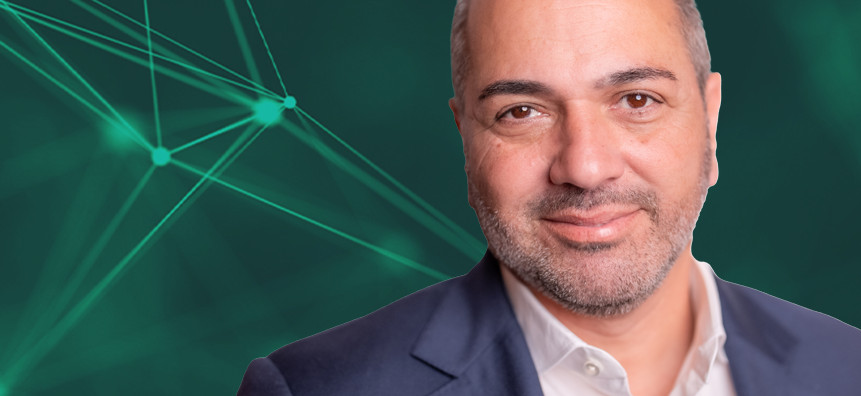
GESF: For over 30 years, Woodie Andrawos has been a prominent figure in the security industry, spending most of that time leading NMC to significant growth through savvy acquisitions and the introduction of innovative technologies and monitoring practices for their customers and the customers of their customers. In June of 2025, Woodie transitioned to the other side of the service spectrum, taking the position of CEO for ORR Protection, a national provider of fire protection and life safety services that has been in business since 1948. Nearly one year later, he has gained a unique perspective on the evolving role monitoring centers play with their alarm company / integrator partners, the non-negotiable nuances of system design, and the pronounced transition from reactive to proactive security which is currently taking place. Woodie discusses all of that and more in his Q and A with us for this month’s Top Right Drawer Feature Article.
GESF: When did you enter the industry and what were your first impressions?
WA: I entered the industry in the early 1990s while pursuing a degree in Computer Science, working with the National Alarm Computer Center (NACC). What started as a job quickly turned into a career. From the beginning, I saw an industry that was incredibly important, but also highly fragmented. At NACC, we were acquiring companies, so I had the opportunity to see a wide range of how organizations operated. There were a lot of strong businesses, but consistency in service, technology, and customer experience significantly varied. What stood out immediately was the mission. This isn’t just another service industry— what we do matters in real time. When an alarm comes in, someone is depending on you to get it right. That responsibility creates a different level of accountability. I also saw early on that monitoring was often viewed as a backend function. We believed then, and I still believe now, that it’s actually one of the most critical parts of the entire value chain.
GESF: How have the demands of contract monitoring centers changed since the early 2000s?
WA: When we co-founded NMC after the sale of NACC in 2001, the focus was on building a monitoring platform that was highly reliable and scalable. Redundancy, uptime, and disciplined operations were the foundation. Since then, expectations have evolved significantly. Monitoring is no longer just about receiving and dispatching signals; it’s about delivering speed, intelligence, and integration. One of the biggest shifts I’ve seen is the move toward proactive services. Through NMC’s work with Netwatch, NMC helped introduce a model centered around proactive video monitoring and recurring revenue, which fundamentally changed how dealers could create value. Today, customers expect more visibility, more data, and faster response times. Monitoring centers are expected to be fully integrated into the customer’s operations, not operating in the background.
GESF: What new perspective have you gained at ORR?
WA: Coming into ORR Protection has reinforced that monitoring is only one part of a much larger ecosystem. At ORR, I’ve gained a deeper appreciation for the full lifecycle from system design and installation to inspection, testing, maintenance, and ultimately monitoring and response. What becomes clear very quickly is that you can’t separate those elements. They all impact each other. The non-negotiables for successful alarm companies are clear:
· Getting detection right from the start
· Maintaining system integrity over time
· And delivering a fast, accurate response when it matters most
In many ways, that’s the entire equation: early detection, precise response, and complete protection which can only be achieved that when every part of the lifecycle is aligned and operating at a high level. If any one of those breaks down, the entire system is compromised. The companies that win are the ones that manage that full lifecycle with consistency. When you do that well, recurring relationships and the revenue that comes with them follow naturally.
GESF: How would you advise your past self on the monitoring side?
WA: Having now seen the full lifecycle up close, I would place greater emphasis on integrating monitoring with the broader customer environment. Operational excellence within the monitoring function is essential, but its effectiveness is heavily influenced by upstream decisions. With that perspective, I would spend more time collaborating with customers to:
· Promote consistency in system design
· Improve installation quality
· Encourage standardized maintenance approaches
· Ensure data is structured to enable more effective outcomes where Monitoring delivers the most value when it is aligned with these upstream elements.
I would approach it not as a standalone service, but as an integrated component of a customer’s overall risk strategy. I believe the new leadership at NMC is doing a great job; especially as we enter the age of AI and the expanded capabilities it brings to monitoring centers, which will be transformative compared to the past 25 years.
GESF: How can alarm companies strengthen their partner relationships?
WA: My experience from NACC to NMC and now ORR Protection has reinforced that the strongest businesses are built on alignment across their partners. For monitoring relationships, that means:
· Clear standards and shared expectations
· Consistent data and open communication
· Integration between systems, not manual workarounds
· Treating the monitoring provider as a true extension of your brand. More broadly, companies need to think about their entire ecosystem—manufacturers, service providers, and technology partners—in the same way. The shift from transactions to true partnerships is what separates companies that operate… from those that scale.
GESF: What’s your perspective on the current state of the industry?
WA: The industry is in the middle of a meaningful transition. We’re moving from reactive systems to more proactive, data-driven solutions. That shift started in areas like video monitoring, but it’s expanding across fire, security, and life safety. What’s not always obvious, but is becoming increasingly important, is the convergence of these systems. Monitoring, detection, analytics, and response are becoming more connected, creating both opportunity and complexity.
At the same time, AI is poised to play a significant role in shaping our industry just as it is across many others. It’s enabling more advanced analytics, smarter monitoring, and more efficient operations, ultimately allowing us to deliver more enhanced and predictive services to our customers.
Another key trend is the growing importance of recurring revenue models. That’s something I’ve been closely involved in over the years, and it continues to reshape how companies grow and create value. Looking ahead, the companies that will lead are the ones that can connect the full lifecycle—design, install, service, and monitoring—into a seamless, data-driven platform that delivers consistent, intelligent outcomes for their customers.
Woodie Andrawos is the CEO of ORR Protection, a national provider of fire and life/safety protection for over 50 years. Woodie started his career in the alarm industry in 1992 working for National Alarm Computer Center (NACC) in their business office, moving his way up to Billing and Credit Manager and ultimately as VP of Finance. In June 2001, he and Michael Shubert founded National Monitoring Center (NMC), where he continued to serve as the CEO until his transition to ORR Protection in 2025.